
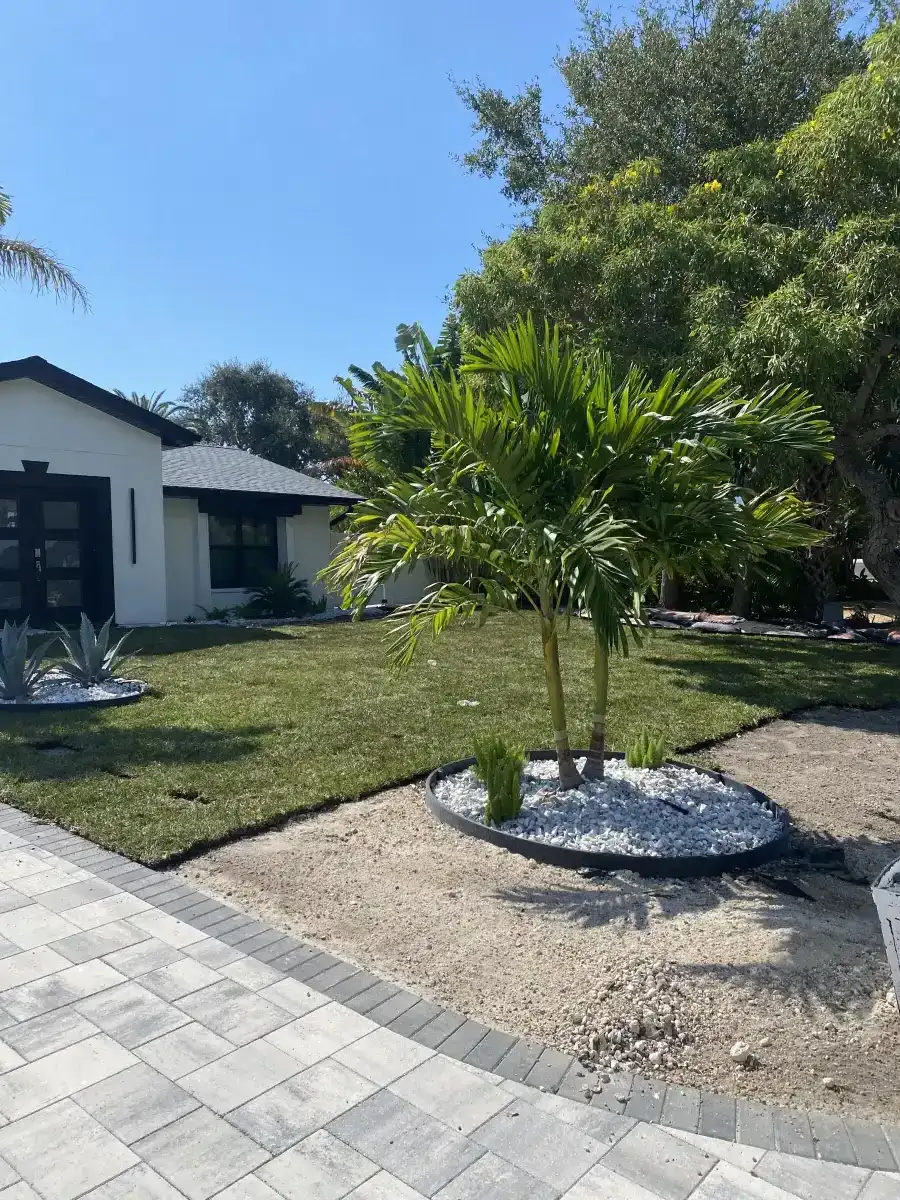
The single most important thing you can do for your St. Petersburg lawn before summer is raise your mower blade to 3.5 to 4 inches and make sure your irrigation system is running correctly. Taller grass shades its own root zone, retains more moisture, and outcompetes weeds. A tuned sprinkler system delivers water evenly so no zone gets drowned while another dries out. Get those two things right in late April and your lawn will handle June through September far better than 90 percent of yards in Pinellas County.
St. Petersburg summers are brutal on turf. Daily highs pushing 92 to 95 degrees, humidity above 80 percent, afternoon thunderstorms that dump an inch of rain in 20 minutes, and then nothing for five days. Chinch bugs show up in the hottest spots. Fungal diseases thrive in the humidity. SWFWMD water restrictions limit you to two days per week of irrigation. The good news is that a few hours of prep work in late April and early May prevents most of the damage homeowners deal with all summer long.
Raise Your Mowing Height
This is the single change with the biggest return. Most homeowners in St. Pete mow too short because it looks manicured. But cutting grass below 3 inches during summer is actively harmful.
Why Taller Grass Wins in Florida Summer
Grass blades are solar panels. The longer the blade, the more energy the plant produces and the deeper the roots grow. Cutting short exposes the soil surface to direct sun, which raises soil temperature, accelerates evaporation, and stresses the root system exactly when it needs the most resources.
Here are the recommended summer mowing heights for the most common grass types in St. Petersburg:
- St. Augustine (Floratam): 3.5 to 4 inches. This is the default grass in most St. Pete yards. At 4 inches, the dense canopy shades out dollar weed and crabgrass before they establish.
- Zoysia: 2 to 2.5 inches. Zoysia grows slower and denser, so it tolerates a slightly lower cut. Still raise it half an inch from your spring height.
- Bermuda: 1.5 to 2 inches. Bermuda handles lower mowing than other varieties but still benefits from raising the blade a notch in peak summer.
- Bahia: 3 to 4 inches. Bahia's deep root system makes it drought-tolerant, but it needs blade length to feed those roots during the hottest months.
For a full comparison of every grass type suited to this area, read our best grass types for St. Petersburg guide.
Mowing Frequency in Summer
During peak growth from June through August, most St. Pete lawns need mowing every 5 to 7 days. St. Augustine grows aggressively with summer rain and heat. The rule is never remove more than one-third of the blade height in a single mow. If your target is 4 inches, mow when the grass reaches 5.5 to 6 inches.
Mow in the morning before 10 AM or in the evening after 5 PM. Cutting grass during peak afternoon heat stresses the plant and the open wound from the cut loses moisture faster in direct sun. Keep your blade sharp. A dull blade tears instead of cutting, leaving ragged tips that turn brown and invite fungal infection.
Adjust Your Irrigation System for Summer
If you have a sprinkler system, late April is the time to switch from your spring schedule to a summer program. If you do not have a system and are relying on a hose, summer is exactly when manual watering fails most homeowners. Learn why in our irrigation installation overview.
SWFWMD Watering Rules (Pinellas County)
The Southwest Florida Water Management District restricts Pinellas County residential irrigation to two days per week. Your watering days are based on your address number:
- Odd-numbered addresses: Wednesday and Saturday
- Even-numbered addresses: Thursday and Sunday
- Watering hours: Before 10 AM or after 4 PM (year-round)
These restrictions apply year-round, but they matter most in summer when evaporation rates peak and your lawn is under the most stress. Read our full SWFWMD watering rules breakdown for details on variances and smart controller exemptions.
Summer Irrigation Settings
The goal is to water deeply and infrequently. Shallow daily watering trains roots to stay near the surface where they dry out fastest. Deep watering twice a week pushes roots down into cooler, moister soil.
- Run time per zone: 45 to 60 minutes for rotary heads, 20 to 30 minutes for spray heads. This delivers approximately 0.75 inches of water per session.
- Total weekly target: 1 to 1.5 inches, including rainfall. Most weeks in summer, afternoon storms deliver part of that. A rain sensor on your controller prevents doubling up.
- Early morning start time: Set your controller to finish before 10 AM. Starting at 4 AM or 5 AM gives the grass time to absorb water before the sun heats the surface. Watering at night keeps grass wet for hours, which promotes fungal growth.
- Check for dry zones: Walk your property in the afternoon. Brown patches or areas that feel crunchy underfoot usually indicate a broken head, clogged nozzle, or zone that is not running long enough. An irrigation repair visit typically costs $150 to $300 and prevents a dead patch from spreading.
Rain Sensor and Smart Controller Check
Florida law requires a rain sensor on every irrigation system. Before summer, verify yours is working. Lift the sensor disc and confirm the controller goes into rain delay mode. If it does not, the sensor needs replacement ($25 to $50 for the part, or call us to handle it).
If you have a smart WiFi controller (Rain Bird ESP-ME3, Hunter Pro-HC, or similar), update the seasonal adjustment to summer mode. These controllers pull weather data for your ZIP code and adjust run times automatically. Confirm the WiFi connection is active and the app shows recent activity.
Fertilize at the Right Time
In Pinellas County, the fertilizer blackout period runs from June 1 through September 30. During those four months, you cannot apply any fertilizer containing nitrogen or phosphorus to your lawn. This is a county ordinance, not a suggestion, and violations carry fines.
That means your last fertilizer application before summer needs to happen between now (late April) and May 31. Here is what to apply:
- Late April or early May: Apply a slow-release nitrogen fertilizer at the rate recommended for your grass type. For St. Augustine, that is typically 1 pound of nitrogen per 1,000 square feet. A 16-4-8 or 15-0-15 slow-release blend is a solid choice. The slow-release formula feeds the lawn gradually over 8 to 10 weeks, carrying it into mid-summer.
- Avoid quick-release nitrogen: Fast-release fertilizer pushes a growth surge that looks good for 2 weeks but burns out quickly and actually weakens the plant heading into heat stress.
- Add iron for color: If you want a deep green look through summer without more nitrogen, apply chelated iron (Ironite or similar) at 2 to 4 ounces per 1,000 square feet. Iron is not restricted during the blackout and gives St. Augustine and Zoysia a dark, rich color without promoting excess top growth.
- Skip phosphorus unless soil-tested: Most Florida sandy soils already have adequate phosphorus. Adding more contributes to nutrient runoff into Tampa Bay without helping your lawn.
Prevent Summer Pests Before They Arrive
The two biggest lawn pest threats in St. Petersburg are chinch bugs and sod webworms. Both peak in summer and both are far easier to prevent than to treat after they have spread.
Chinch Bugs
Chinch bugs are the number one killer of St. Augustine grass in Florida. They pierce grass blades and suck out the sap, leaving irregular yellow-brown patches that spread outward. The damage looks like drought stress, and many homeowners water more thinking the lawn is dry, which does nothing because the grass is already dead.
Chinch bugs prefer the hottest, driest areas of the yard. South-facing slopes, areas near driveways and sidewalks that absorb and radiate heat, and any zone with thin turf coverage. They thrive when temperatures stay above 85 degrees for sustained periods, which in St. Pete starts in late May.
- Prevention: Apply a granular bifenthrin insecticide (like Talstar or generic bifenthrin G) in mid to late May. This creates a barrier before chinch bug populations explode in June. Water it in lightly after application.
- Detection: Do the "float test" weekly starting in May. Cut both ends off a coffee can, push it 2 inches into the soil at the edge of a yellowing area, and fill with water. Wait 5 minutes. If chinch bugs are present, they float to the surface. They are small (about 1/5 inch) with black bodies and white wings.
- Treatment: If you catch them early, a targeted liquid bifenthrin application to the affected area and a 10-foot perimeter around it usually stops the spread. If the damage is widespread, you may need a full-yard treatment and potentially sod replacement in the dead areas.
Sod Webworms
Sod webworms are caterpillars that chew grass blades at the soil line, creating thin, ragged patches. You will often see small tan moths flying in a zigzag pattern over the lawn at dusk. Those moths are laying eggs that hatch into the destructive caterpillars.
- Prevention: Keep thatch below 0.5 inches. Webworms hide in thatch during the day. A healthy mowing routine at the correct height keeps thatch manageable.
- Detection: Pour a soapy water solution (2 tablespoons dish soap per gallon) over a 2-by-2-foot area. Webworms will surface within 2 to 3 minutes.
- Treatment: Bacillus thuringiensis (Bt) is an organic option that targets caterpillars without harming beneficial insects. Apply in the evening when webworms are actively feeding. Granular bifenthrin also controls webworms if you are already applying for chinch bugs.
Manage Fungal Disease in Humid Conditions
St. Petersburg's summer humidity creates ideal conditions for fungal lawn diseases. The two most common are gray leaf spot and brown patch (large patch in warm-season grass).
- Gray leaf spot: Shows as small gray or tan spots on individual grass blades that expand and merge. Most common in St. Augustine during periods of high humidity and warm nights. Avoid nitrogen fertilizer during active outbreaks (another reason to finish fertilizing by May).
- Brown patch / large patch: Creates circular patches of yellowing grass with a darker ring at the expanding edge. Typically triggered by overwatering, poor drainage, and nighttime watering. The fix is cultural: water in the morning, improve drainage in problem areas, and reduce irrigation frequency.
- Prevention: Water early (finish by 10 AM), keep mower blades sharp (clean cuts heal faster), avoid fertilizing during the blackout, and ensure good air circulation by trimming back shrubs that crowd turf areas.
Landscape Bed Prep for Summer
Your lawn gets most of the attention, but landscape beds need summer prep too. Florida's rainy season from June through September delivers 35 to 40 inches of rain in concentrated bursts that wash away mulch, flood beds, and promote root rot in plants that are not adapted to the moisture.
- Refresh mulch to 2 to 3 inches: Mulch breaks down in Florida heat. A fresh layer in late April or early May insulates roots, retains moisture during dry stretches between storms, and suppresses weeds when the heat triggers germination. Pine bark or eucalyptus mulch holds up better than cypress in our climate.
- Check drainage around beds: Water should flow away from plant root zones, not pool around them. If you notice standing water in beds after a rain event, the grade may need adjustment or a drainage solution installed.
- Prune before the growth surge: Most Florida shrubs and trees enter rapid growth in May. Prune dead wood and shape plants before the rainy season starts. Once summer storms roll in, heavy unpruned branches become wind damage risks.
- Swap out winter annuals: If you still have petunias, pansies, or snapdragons from winter planting, they are about to die in the heat. Replace with summer-tough options: pentas, lantana, portulaca, blue daze, or ornamental sweet potato vine. These handle 95-degree days and afternoon storms without collapsing.
For full-property landscape design that accounts for seasonal transitions, see our landscape design services.
The Summer Lawn Prep Checklist
Here is a quick reference you can work through over a weekend in late April or early May. Tackle them in order:
- Raise mower blade to the recommended summer height for your grass type
- Sharpen mower blade (or replace if it has been more than 50 hours of mowing)
- Run every irrigation zone manually and walk the yard checking for broken heads, leaks, or dry spots
- Verify rain sensor operation by lifting the disc and confirming the controller goes into rain delay
- Update controller schedule to summer run times (deeper, less frequent)
- Apply slow-release fertilizer before the June 1 blackout starts
- Apply preventive insecticide in mid-May for chinch bugs and webworms
- Refresh mulch in all landscape beds to 2 to 3 inches
- Prune dead wood and shape shrubs before the rainy season growth surge
- Replace winter annuals with heat-tolerant summer varieties
Most of this is straightforward DIY. The exceptions are irrigation system repairs (pressurized lines and wiring are best handled by a licensed professional) and significant pest or fungal outbreaks that have already spread beyond a small area. If you are seeing damage you cannot identify, take a close-up photo and call us. We can usually diagnose the issue from a picture and recommend the right course of action before it gets worse.
Need Help Getting Your Lawn Summer-Ready?
From irrigation tune-ups to sod replacement and full landscape overhauls, we handle it all across St. Petersburg and Pinellas County. Call 757-634-6562 or get a free estimate.