
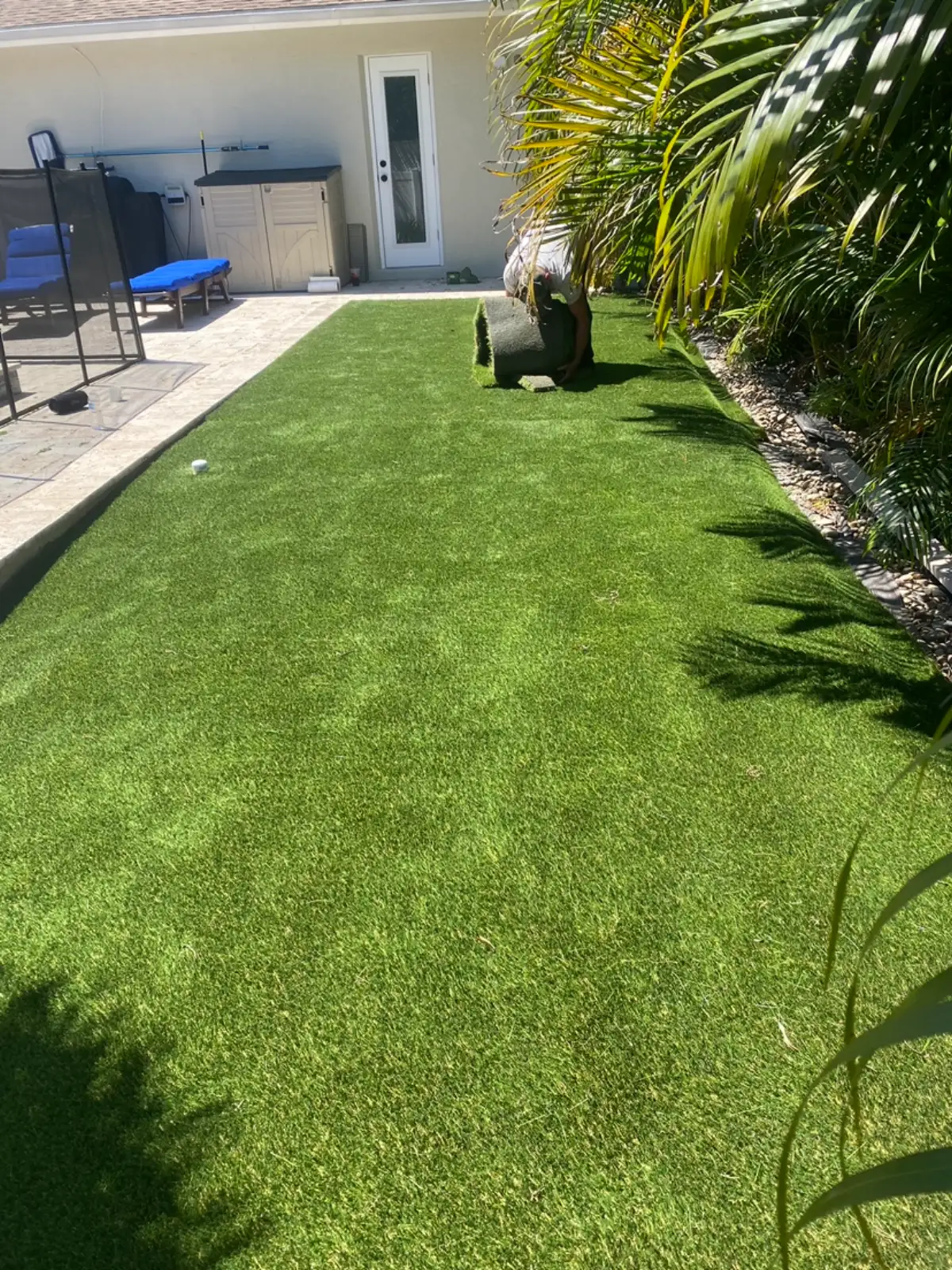
Hound Dog Landscaping currently publishes an installed artificial turf range of $8 to $15 per square foot for St. Petersburg. That puts a straightforward 500-square-foot area at a planning total of $4,000 to $7,500. The final quote depends on what has to be removed, how the ground must be prepared, which turf and infill fit the use, and how the finished surface will drain and meet patios, beds, fences, or walkways.
Square-footage math gives you a realistic place to begin, but it cannot price the work below the turf. Hound Dog's artificial turf installation service includes excavation, base preparation, compaction, turf, infill, and seaming in its published range. A site review confirms which details your yard needs and whether drainage, access, or a complex layout will change the scope.
Artificial Turf Cost by Square Footage
These examples apply Hound Dog Landscaping's published installed range to the square-footage questions buyers ask most often. They are planning totals for the St. Petersburg service area, not guaranteed prices.
| Measured turf area | Planning range at $8–$15 per sq. ft. |
|---|---|
| 200 square feet | $1,600–$3,000 |
| 400 square feet | $3,200–$6,000 |
| 500 square feet | $4,000–$7,500 |
| 750 square feet | $6,000–$11,250 |
| 1,000 square feet | $8,000–$15,000 |
For a rough measurement, divide an irregular yard into rectangles, multiply the length by the width of each, and add those areas together. Subtract large surfaces that will remain, such as a patio or pool deck. The installer should still measure the site because curved borders, narrow strips, tree wells, fixed objects, seams, and the direction of the turf fibers can affect material quantities and labor.
A small area may not land at the lowest result from simple multiplication. Mobilization, removal, equipment, delivery, minimum material quantities, cuts, and perimeter work still have to happen. Ask for a complete written total rather than assuming a 200-square-foot project will cost exactly one-fifth of a 1,000-square-foot installation.
Six Factors That Change an Artificial Turf Quote
- Existing surface and removal: Grass, roots, weeds, soil, old turf, rock, or another surface can require different removal and disposal work.
- Base preparation: Excavation depth, grading, base material, compaction, and correction of soft or uneven areas affect how the finished turf looks and holds its shape.
- Drainage: St. Petersburg's concentrated summer rain makes existing low spots and runoff paths important. Turf lets water pass through, but the prepared base and grade still need a suitable route for that water.
- Turf and infill: A decorative lawn, pet area, play space, pool surround, and putting surface do not necessarily call for the same pile, backing, density, or infill.
- Shape, seams, and edges: Curves, islands, narrow runs, multiple transitions, and the number and placement of seams can increase cutting, waste, and installation time.
- Access: A clear path for removal, base material, turf rolls, and equipment is different from a long carry through a narrow side gate or occupied yard.
Why Drainage Belongs in the Price Conversation
Artificial turf removes mud and mowing from the finished area, but it does not make an existing drainage problem disappear. If water already collects beside a slab, moves toward the house, washes across a walkway, or sits in a low section after a storm, covering the area without addressing the cause can leave the same water problem below or around the new surface.
Tell the installer what happens during a heavy rain, even if the yard is dry during the estimate. The right scope may involve grading or another drainage solution before the base and turf go down. For coastal exposure, narrow access, sandy soil, and other local planning considerations, review Hound Dog's St. Petersburg service-area guide or the broader Pinellas County service area.
What Should a Complete Turf Estimate Include?
To compare proposals fairly, look for the same scope in each one. A useful estimate should identify the measured area, existing-surface removal, hauling and disposal, excavation or grading, base preparation and compaction, drainage work, turf product, infill, seams, perimeter fastening or edging, transitions, cleanup, and any work priced separately.
Ask how the proposed turf fits the way you will use the yard. Pet traffic, play, a pool edge, furniture, full afternoon sun, and a decorative low-use area create different priorities. Product appearance matters, but so do surface temperature, drainage, cleaning, and how the turf meets surrounding materials. If you are deciding between a living lawn and synthetic turf, the sod versus artificial turf guide compares the day-to-day tradeoffs.
Budget for Ownership, Not Only Installation
Artificial turf does not need mowing or routine irrigation to stay green, but it is not maintenance-free. Leaves and debris still need to be removed. High-use fibers may need brushing, and pet areas need prompt waste pickup and rinsing. Infill, seams, edges, and drainage performance should be checked over time.
When comparing turf with natural grass, list the costs that apply to your yard rather than relying on a universal payback claim. That may include lawn service, irrigation water, fertilizer, pest treatment, repair of worn areas, and occasional sod replacement on one side; then installation, cleaning, brushing, infill, and future repairs on the other. The best choice depends on your install area, intended use, sun exposure, tolerance for heat, and the maintenance you want to keep doing.
FAQ: Artificial Turf Cost
Hound Dog Landscaping currently publishes an installed range of $8 to $15 per square foot for artificial turf in St. Petersburg. The final quote depends on measured area, removal, base and drainage work, turf and infill selection, layout, access, edging, and transitions.
At the published $8 to $15 per-square-foot range, 200 square feet produces a planning total of $1,600 to $3,000. Small projects do not always price at a simple square-foot multiple because mobilization, cutting, edging, and minimum material quantities may still apply.
Using the published installed range, 400 square feet works out to a planning total of $3,200 to $6,000. A site visit is still needed to confirm the area and the preparation, drainage, access, material, and edge details behind the final price.
At $8 to $15 per square foot, 1,000 square feet produces a planning range of $8,000 to $15,000. Larger or irregular layouts can involve additional seams, cuts, waste, or preparation, so the measured installation plan determines the quote.
A useful estimate should identify the measured area, existing-surface removal, disposal, excavation or grading, base preparation, drainage work, turf product, infill, seams, perimeter fastening or edging, transitions, cleanup, and any separately priced work.
Get an Artificial Turf Estimate for Your Yard
Hound Dog Landscaping LLC serves St. Petersburg, Pinellas County, and the Gulf Beaches. Call 757-634-6562 or request a free estimate to confirm square footage, site preparation, drainage, materials, and a complete installed price.