

Drainage Solutions for Wet St. Petersburg Yards
French drains, catch basins, channel drains, regrading, and dry wells for yards that stay soggy after Florida rain. We diagnose where the water starts, where it collects, and how it can leave without creating a new problem.
Flat Land, Sandy Soil, 50 Inches of Rain -- The Perfect Flood Formula
Pinellas County sits at an average elevation of 15 feet. Many neighborhoods in St. Petersburg, Gulfport, and the Gulf Beaches sit at 5 to 8 feet. When 2 inches of rain dump in 30 minutes during a summer thunderstorm, flat terrain with sandy soil has nowhere to send it.
The water pools on the surface because the soil beneath is already saturated from the high water table. It stays there for hours or days, drowning grass roots, attracting mosquitoes, and slowly eroding the soil beneath your foundation. Every storm adds to the damage. Standing water is not an inconvenience -- it is active property damage happening in slow motion.
Proper drainage engineering creates a path for that water. We use gravity, pipe, and strategic grading to collect water where it accumulates and move it to an approved discharge point. The yard dries within hours instead of days. Your sod stays healthy, your foundation stays stable, and your backyard stays usable.

Drainage Work Matched to the Way Water Moves
French Drains for Soggy Soil and Foundation Edges
French drains collect water below the surface and move it through perforated pipe wrapped in gravel and fabric. They are useful where the yard stays soft, where roof runoff saturates the soil, or where water pushes toward a slab after repeated storms.
Catch Basins for Standing Surface Water
Catch basins sit at the low point of a yard, driveway edge, or patio transition. The grate collects surface water, the basin traps debris, and underground pipe carries the water toward an approved discharge route.
Channel Drains for Driveways, Pool Decks, and Patios
Channel drains intercept water moving across hard surfaces before it reaches the house, garage, or lawn. They work well along driveway aprons, paver edges, pool decks, and patio thresholds where sheet flow needs a clean collection line.
Regrading and Swales for Better Surface Flow
Some yards need the ground reshaped before drains can do their job. Regrading creates positive slope away from structures, while shallow swales guide stormwater through the yard without leaving trenches, washouts, or muddy ruts.
Dry Wells When Water Needs a Controlled Place to Go
Dry wells can help when the property has no practical surface discharge route. Water collects in an underground chamber and releases slowly into suitable soil, reducing ponding without sending runoff toward a neighbor or building.
Combined Systems for Repeated Flooding
Many wet yards need more than one tool. A complete drainage plan may combine regrading, French drains, catch basins, and pipe so each part of the property handles water correctly. For a deeper homeowner guide, read our Florida rainy-season drainage article.
Drainage Starts with the Source, Not the Pipe
A good drainage estimate should explain why the water is there. Roof runoff, flat grade, a settled side yard, a hardscape edge, compacted soil, and a neighboring high spot all call for different corrections. Installing pipe without that diagnosis can simply move the problem to another part of the property.
We walk the yard, look for low points, check where runoff enters, and decide whether the project needs collection, grading, discharge, soil stabilization, or a combination. That process keeps the recommendation practical: no oversized system where a swale will work, and no shallow cosmetic fix where water is already threatening the house.
Once the drainage route is clear, related work can be planned in the right order. New sod, landscape beds, pavers, turf, retaining walls, and fences all perform better when water movement is solved first.

Standing Water Gets Worse With Every Storm. Fix It Now.
Free site inspections across St. Petersburg and Pinellas County. We trace the water source, design a solution, and give you a written quote before any work begins.
Request a Free EstimateDrainage Questions
$1,800 to $7,000 for most residential projects. A single French drain run costs $1,800-$3,500. Catch basins run $1,500-$2,500 each. Full-property drainage with regrading and multiple components runs $4,000-$7,000.
Flat yards need a combination approach: slight regrading for surface flow, French drains or catch basins at low points, and pipe to carry water to a discharge. A single solution rarely works on flat Pinellas County terrain.
Simple French drains take 1-2 days. Multi-component systems with regrading take 3-5 days. We schedule dry weather for excavation and test every system before backfilling.
Yes in most cases. A channel drain across the driveway apron or catch basin at the low point collects water, and underground pipe carries it away. Common fix in older Pinellas County neighborhoods.
Most residential French drains and catch basins do not need a permit if they stay on your property. Connections to municipal storm systems and retaining walls over 4 feet do. We verify requirements for every project.
Solve the Complete Water Problem

Erosion Control
Drainage moves water. Erosion control holds the soil in place. Many projects need both for a complete solution.
Learn More →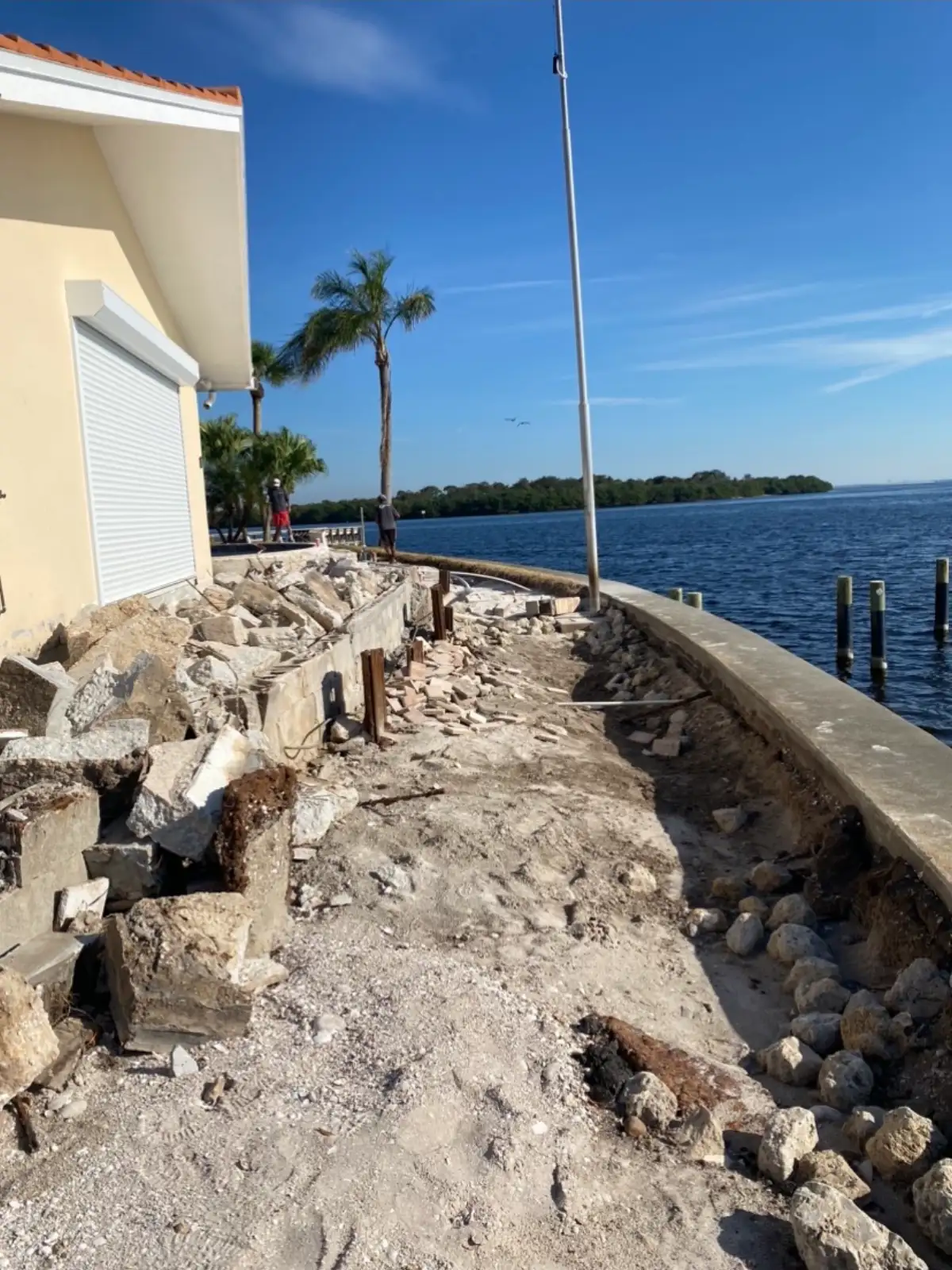
Retaining Walls
Grade changes often need structural walls combined with drainage for a permanent fix.
Learn More →
Dirt Work & Grading
Regrading the foundation of most drainage solutions. We reshape terrain so gravity does the work.
Learn More →