
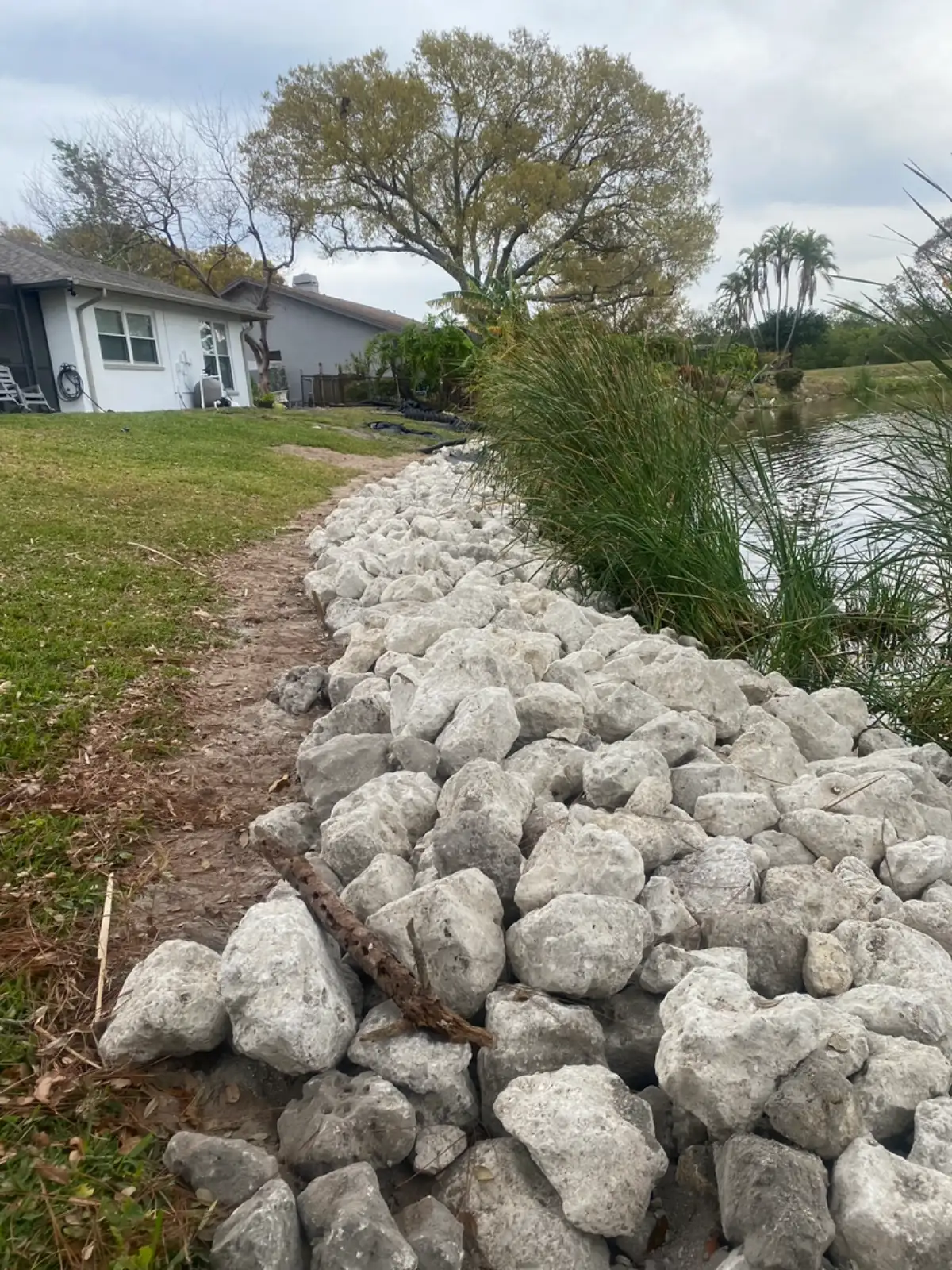
Finding a good landscaper is less about collecting the lowest number and more about confirming what each number buys. One estimate may cover surface installation only; another may include removal, grading, irrigation adjustments, material delivery, cleanup, and care instructions. Without a defined scope, the totals are not comparable.
St. Petersburg yards can add another layer to that decision. Heavy seasonal rain, sandy soil, mature shade, coastal exposure, older irrigation, and narrow access may affect which work should happen first. Before hiring a St. Petersburg landscaper, ask these seven questions and listen for answers tied to your actual property.
1. What Problem Is This Scope Intended to Solve?
“Redo the yard” can mean replacing worn sod, correcting runoff, improving sprinkler coverage, creating usable hardscape, rebuilding beds, or combining several of those needs. Ask the landscaper to state the primary problem and the proposed result in plain language.
This matters because the visible symptom may not identify the full cause. Thin grass could relate to shade, irrigation coverage, soil preparation, traffic, or drainage. A wet area might call for a different response than a bed that washes out. A recommendation should connect the observed conditions to the proposed work without promising what has not yet been diagnosed.
2. What Exactly Is Included—and Excluded?
Ask for the work area, removal, preparation, materials, quantities, installation, cleanup, and restoration to be written clearly. The proposal should also identify exclusions and homeowner responsibilities. If an estimate says “new landscape” but does not define those details, you cannot tell whether competing estimates cover the same job.
For material-heavy work, confirm whether delivery, equipment, edging, disposal, and transitions to existing lawn, beds, walkways, fences, or pool areas are included. For a larger redesign, review how the landscape design will translate into an installable scope.
3. Is the Price Hourly, Unit-Based, or for the Complete Project?
Search results often surface questions such as “Is $100 an hour too much?” or “How much for two hours of yard work?” The honest answer is that an hourly number alone does not reveal crew size, equipment, disposal, travel, minimum charges, material handling, or expected productivity.
Hourly pricing may make sense for a defined service visit. Unit pricing may help explain material quantities. A complete project price is often easier to compare for installation work—provided the written scope is complete. Ask what can change the total and how additional work must be approved. For broader context, review the St. Petersburg landscaping cost guide.
4. Which Site Conditions Could Change the Plan?
Walk the property with the landscaper. Point out standing water, downspouts, low areas, roots, shade, irrigation heads, utility equipment, gates, pets, shared access, and surfaces that need protection. If the yard behaves differently during a storm, describe where water enters, collects, and exits.
The City of St. Petersburg explains how the public stormwater system works and why streets and drains should stay clear. On private property, ask what the site review shows and whether a drainage solution needs to be evaluated before finish materials are installed.
5. In What Order Should the Work Happen?
Project order matters when work overlaps. Underground irrigation or drainage is usually easier to evaluate before fresh sod, planting, rock, or pavers cover the area. Grading and base preparation need to be resolved before the finish depends on them. Ask which phase comes first, how equipment will reach the work area, and what will protect completed sections.
If the project includes sprinkler installation, sod, beds, and hardscape, the proposal should explain how those pieces connect. A clear sequence can prevent a later crew from trenching through or driving over newly completed work.
6. What Site Rules or Schedule Conditions Need to Be Cleared?
Permits, utility marking, community rules, material availability, saturated ground, severe weather, property access, and coordination with other trades can all affect timing. Requirements vary by property and scope, so ask who will determine what applies and which responsibilities belong to the contractor or homeowner.
Ask for a current start window and expected duration, plus the conditions that could move either one. If landscaping must coordinate with a pool, fence, exterior, or utility project, settle that sequence before work begins.
7. What Happens After Installation?
Clarify watering, traffic limits, mowing, pruning, cleaning, inspections, controller settings, or adjustments that may be needed after completion. Ask who is responsible for each step and when normal use can resume. New sod installation will not have the same handoff as pavers, decorative rock, planted beds, or irrigation work.
If a warranty is offered, request the term, coverage, exclusions, reporting process, and care requirements in writing. Do not assume every plant, material, or service has identical terms.
Use the Written Proposal as Your Comparison Checklist
- The work area and intended result are specific.
- Preparation, materials, quantities, installation, cleanup, and restoration are defined.
- Important property conditions and project order are addressed.
- Exclusions and homeowner responsibilities are visible.
- Start-window, duration, and change assumptions are clear.
- Aftercare and any warranty terms are provided in writing.
FAQ: Hiring a Landscaper in St. Petersburg
Compare written scopes for the same work area and outcome. Review preparation, materials, quantities, installation, cleanup, exclusions, schedule assumptions, aftercare, and how changes will be approved. A clear site-specific proposal is more useful than a price with little detail.
An hourly number cannot be judged by itself. Ask whether it covers one worker or a crew, which equipment is included, whether disposal and travel are included, whether there is a minimum charge, and how many hours the task is expected to take. For an installation, a complete project price may be easier to compare.
The word “yard” can mean the property or a cubic yard of material, so it is not a dependable unit for a complete landscaping price. Ask for the work area, material quantity, preparation, delivery, installation, and cleanup to be listed separately enough that you know what the estimate covers.
The cost depends on crew size, equipment, minimum service charges, disposal, access, and the exact task. Define the result you expect in those two hours and ask what is included before comparing totals.
A useful proposal identifies the work area, removal and preparation, materials and quantities, installation, cleanup, restoration, exclusions, schedule assumptions, homeowner responsibilities, payment terms, change approval, and aftercare.
Plan Your St. Petersburg Landscaping Project
Hound Dog Landscaping LLC provides landscaping and connected yard services in St. Petersburg, Pinellas County, and the Gulf Beaches. Call 757-634-6562 or contact Hound Dog Landscaping to request a free estimate.