
Homeowners searching for a sprinkler installer often begin with cost, permits, and how many zones a yard needs. Those are useful questions, but none has a dependable one-size answer. A strong proposal should connect each answer to the actual property: its water supply, lawn and bed layout, sun exposure, hardscape, access, and any work planned after the irrigation lines go in.
Use the questions below when comparing a sprinkler installation in St. Petersburg. They help show whether two estimates describe the same scope—or two very different systems.
1. How Will You Check Pressure, Flow, and the Existing System?
The design has to work with the water available at the property. Ask how pressure and flow will be checked and whether existing valves, lines, heads, wiring, or the controller can be reused. Keeping suitable components may reduce unnecessary work; keeping a layout that no longer fits the yard can preserve the same coverage problems.
If the current system has only a few isolated faults, irrigation repair may be the more practical recommendation. If dry areas, overspray, mixed watering needs, and repeated failures affect much of the property, a new layout may be easier to operate and maintain. The proposal should make that distinction clear.
2. What Does Each Proposed Zone Water?
A zone should group areas that can be watered effectively at the same time. Full-sun lawn, shaded turf, planting beds, narrow side yards, and windy edges may need different head types, application rates, or runtimes. Ask the installer to identify each zone and explain why those areas belong together.
Also look at where the water stops. Good coverage should account for driveways, walkways, walls, fences, pool decks, and streets so the system is not designed around routine overspray. On compact St. Petersburg properties, those boundaries can matter as much as the lawn dimensions.
3. Should Irrigation Come Before Sod, Beds, Pavers, or a Fence?
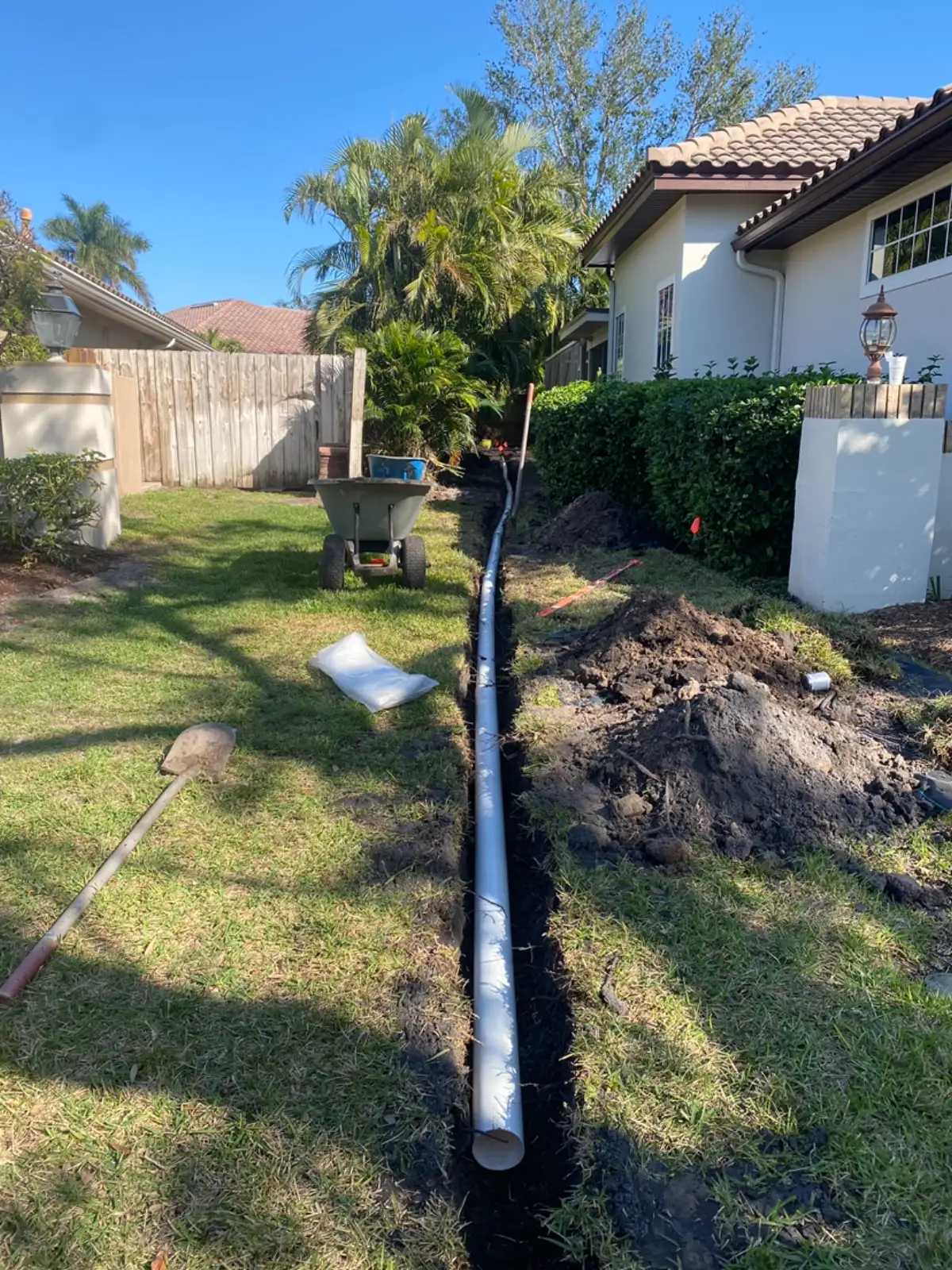
Underground work is usually easier before finish materials are installed. If new sod is planned, the lines and heads can be installed and coverage tested before the lawn enters its establishment period. New planting beds may need their own watering method. Paver, fence, and landscape-bed plans can affect trench routes and head locations.
Share the complete yard plan during the estimate—even if later work will happen in phases. The installer can then identify sleeves, crossings, valve access, or future zone changes before new surfaces make them harder to reach.
4. Is the Wet Area an Irrigation Problem or a Drainage Problem?
A new system can correct uneven application and reduce overwatering, but it does not automatically solve water that collects after summer rain. Low grades, compacted areas, roof runoff, and blocked flow paths may require a separate drainage evaluation.
Ask what the installer observed when the property was dry and, if possible, describe where water sits after a storm. That helps keep two different problems from being folded into one sprinkler proposal.
5. Who Confirms Permit, Backflow, and Watering Requirements?
Permit, backflow, utility, and inspection requirements can vary with the project, water source, and jurisdiction. Before booking, ask which requirements apply to the property, who confirms them, who schedules any inspection, and whether associated work or fees appear in the written scope.
Controller programming should also reflect the current rules that apply when the system is placed in service. Because watering schedules and exceptions can change, ask how the initial program will be set and what the homeowner needs to adjust later. For projects beyond the city, review the company’s approach to sprinkler installation across Pinellas County.
6. What Does the Price Include After the Trenches Are Opened?
Lot size alone does not define the price. Zone count, equipment, access, roots, existing hardscape, connection work, removal, and restoration can all affect the scope. A useful proposal should state what is included rather than relying on a single total.
- areas to be irrigated and the purpose of each zone;
- major equipment, controller work, and existing parts being reused;
- trenching, difficult crossings, utility coordination, and access assumptions;
- testing, head adjustment, cleanup, and surface restoration;
- permit, inspection, backflow, or connection responsibilities where applicable;
- exclusions and optional work that could change the final scope.
If two proposals use different equipment or handle restoration differently, the lower total may not represent the same finished work. Ask for those differences in writing before deciding.
7. What Happens During Testing and Handoff?
The final walkthrough should be part of the installation, not an afterthought. Ask whether every zone will be run, coverage and overspray adjusted, the controller programmed, and shutoff or manual operation explained. You should know which areas each zone serves and who to contact if a coverage issue appears after the yard settles.
A clear handoff matters even more when sod or plants follow the installation, because the initial schedule may differ from the long-term program. Confirm who coordinates that change and what information will be left with you.
FAQ: Booking a Sprinkler Install in St. Petersburg
The price depends on the irrigated area, available pressure and flow, number of zones, equipment, access, trenching, restoration, and how much of an existing system can be reused. A site-specific written proposal is more useful than a price based only on lot size.
Zone count depends on yard shape, water supply, sprinkler type, sun and shade, and whether lawn and planting beds need different watering methods. The installer should be able to explain what each proposed zone serves.
In most projects, underground irrigation work and coverage testing should happen before sod installation. That avoids cutting through a new lawn and lets the watering plan be checked before the sod establishment period begins.
Permit, backflow, and utility requirements can depend on the project, water source, and jurisdiction. Ask the installer which requirements apply to your property, who confirms them, and whether related fees or inspections are included in the proposal.
Not necessarily. Better coverage and scheduling can prevent irrigation-related overwatering, but standing water after storms may involve grading, roof runoff, soil conditions, or another drainage issue that needs separate evaluation.
Request a Site-Specific Sprinkler Estimate
Hound Dog Landscaping LLC serves St. Petersburg and Pinellas County. Call 757-634-6562 or tell us about your yard on the contact page to request a free estimate.